


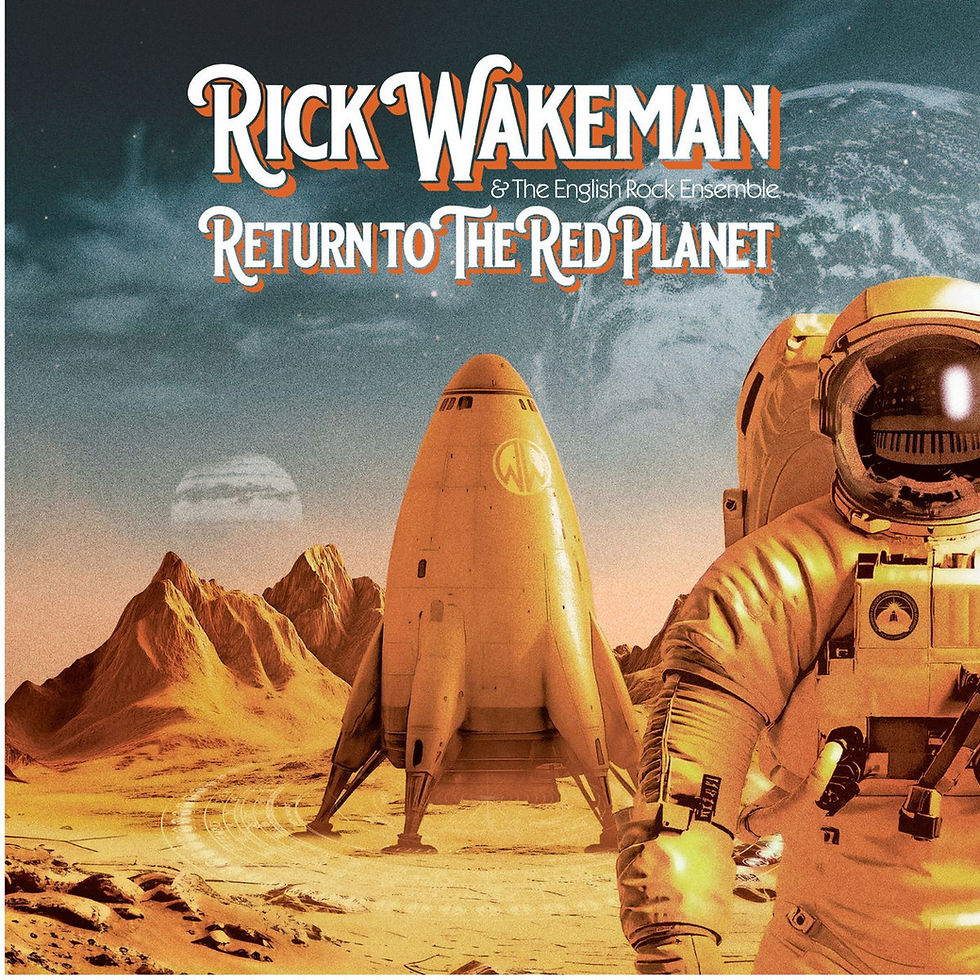
Album Review: Rick Wakeman - Return to The Red Planet
2 hours ago
6 min read
Written: 11th October 2026
To fans of progressive rock and indeed many music fans in general, keyboardist Rick Wakeman requires little introduction. The charismatic Englishman played with Yes for many years as well as working with artists as renowned as David Bowie, Cat Stevens and Brian May. In 2020, Wakeman – with a band featuring Lee Pomeroy, Dave Colquhoun and Ash Soan – released The Red Planet. An album dedicated to Mars, it was hailed as one of the best progressive rock albums he has made since the heyday of material such as The Six Wives of Henry VIII and Journey to the Centre of the Earth in the 1970s. Now he returns to the same inspiration with Pomeroy and Colquhoun joined by drummer Adam Falkner and, on some tracks, vocalist Mollie Marriott, daughter of Steve Marriott. Wakeman comments, “Once I started looking at the new data and photographs, I realised there was an entirely new album waiting to be written. There was simply too much more to say about Mars - musically and spiritually - not to return.”
The album opens with The Jezero Crater as winds sweeping across the vast surface of Mars before grand, luscious keyboards and XXX percussion merge with Pomeroy’s xxx basslines and thoughtful guitar from Colquhoun. The main theme makes it easy to imagine soaring high through the sky accelerating as we go. Instruments then fall away to reveal a more delicate keyboard motif and the first vocals from Mollie Marriott. Life giving water / Flow into ancient lakes / Where there will be life. The Jezero Crater, a 45-kilometre-wide impact crater on Mars, is thought to have once contained a lake fed by an ancient river system, making it a key location in the search for evidence of past microbial life on the Mars. Following the quieter vocal section, the tempo increases and, before returning to the opening theme, Wakeman delivers a display of keyboard dexterity. As the journey resumes, we are swept along by every twist and turn.
Bowie’s Vision is dedicated - as one might imagine – to Wakeman’s longtime friend. “I have been wanting to do a musical tribute to David ever since this world lost him and so returning to the Red Planet gave me the perfect opportunity to do just that and compose and record 'Bowie’s Vision'. It’s a very personal piece of music and tells the story of our times together. He gave me warmth of musicality mixed with melody and surprise and these are the ingredients that come together to make up this very special track for a very special friend.” A marching type of rhythm runs through much of the track giving it an extremely propulsive, if controlled, feel. Wakeman plays some of his most inventive solo lines and Marriott plays further tribute to Bowie through the lyrics. From whence they came / Spiders in human form / Falling to Earth / And so the dream was born. After four minutes, the track takes an unexpected but enchanting turn. Church-like organ and choral voices meld in a powerful and celestial conclusion, complete with some impressively accomplished guitar work from Colquhoun.
In contrast, Noctis Labyrinthus – Latin for Labyrinth of the Night - is a sprawling cinematic piece that finds Wakeman utilising a diverse range of keyboard sounds. Moving through a variety of musical landscapes, it is a restless track that highlights just what an excellent band Wakeman has compiled. The changes in dynamics and tempo feel remarkably natural, creating the impression of journeying through the vast, labyrinthine network of valleys and canyons after which the piece is named. Like a skilled pilot weaving through unfamiliar terrain, Wakeman guides the listener through every sudden twist and change of direction with complete assurance.
Maintaining the variety that has thus far embodied Return to The Red Planet, Noachis Terra (Land of Noah) - an extensive, heavily cratered southern highland region on Mars - is brought to life through a slow-moving, ambient aura. It possesses an almost late-night, lounge-like quality. During the final two minutes, in one of my favourite passages on the album, woodwind, insistent yet never overbearing percussion and vibrant melodic motifs combine to propel the piece forwards. This development introduces another dimension to the album whilst feeling entirely consistent with everything that has come before. In contrast to the towering keyboard chords heard elsewhere, Wakeman favours iridescent synthesiser textures here, creating a sense of motion and optimism that proves quietly exhilarating.
Witch Hazel Hill proves that Wakeman is unafraid to change direction from one composition to the next. Buoyant and uplifting, it ranks among the more energetic pieces on Return to the Red Planet. Pomeroy and Colquhoun appear to relish the opportunity, contributing stirring bass work and rapid-fire guitar interplay that gives the album some of its heaviest moments, whilst Wakeman himself threads effortlessly between them with a series of dazzling runs. The result is a performance that will delight admirers of his earlier work while never feeling trapped by the past.
St. Paul’s Bay is a song that plays with a variety of motifs, allowing them to rise, fall and return throughout its duration. Following a jaunty introduction, a brief interlude shortly after the one-minute mark recalls the atmosphere of Awaken from Going For The One and, despite its brevity, it is enough to send a shiver down the spine. Colquhoun delivers a delightfully restrained guitar solo during the central movement before proceedings gather momentum once more. When that Awaken-like aura returns, it does so with an effortless sense of flow, the rhythms unfolding so naturally that it almost feels as though Wakeman is improvising over the top, yet he never relinquishes control of the composition's direction.
One of the album’s more curious diversions is Martian Dust Devils. Mollie Marriott returns and initially creates a more unsettled atmosphere through a series of staccato musical phrases. This gradually yields to an unmistakable waltz-like rhythm. Whilst these atmospheric whirlwinds can reach far greater speeds than their terrestrial counterparts, Wakeman chooses to present them with an almost playful character, the music spinning and circling as though the dust devils are dancing across the Martian landscape. It adds another intriguing shade to the album's palette, although it remains the one composition that has yet to connect with me to quite the same degree as the rest of the material.
Medussa Fossae, on the other hand, took little time to work its way under my skin with its infectious rhythmic structures and the band's ability to move between contrasting moods with ease. Ranging from calmer passages, during which sparkling synthesisers intertwine with carefully picked guitar lines, to a military-inspired flourish and some fabulous flamenco-style guitar from Colquhoun, the composition constantly finds new ways to hold the listener's attention. Wakeman, meanwhile, revels in the opportunity to weave a series of adventurous keyboard excursions through the arrangement, demonstrating that he has lost none of his enthusiasm for experimentation. Full of vitality, colour and movement, it is one of the album's most engaging tracks.
Return to The Red Planet concludes with its longest composition, the eight-minute The Epochs of Mars. At times, it possesses an almost medieval quality, whilst the simply gorgeous central theme once again evokes the sheer vastness of the planet itself. Ethereal choral voices further reinforce our focus on this fascinating celestial body. Later, gentle piano and elongated synthesiser notes accompany Marriott's narration that there is still much to learn about Mars. It is as though time itself is momentarily standing still, allowing us to reflect upon everything that has come before. However, the inevitable passage of time soon reasserts itself through a stirring snare-drum motif and the closing minutes rank among the most beautifully constructed on the album. There is an almost nostalgic quality to the acoustic guitar lines, whilst a sense of restraint and majesty pervades the conclusion. Peaceful and contemplative, it feels entirely fitting that the album should end in this manner, leaving us with the sense that this world of exploration and discovery still holds countless mysteries waiting to be uncovered.
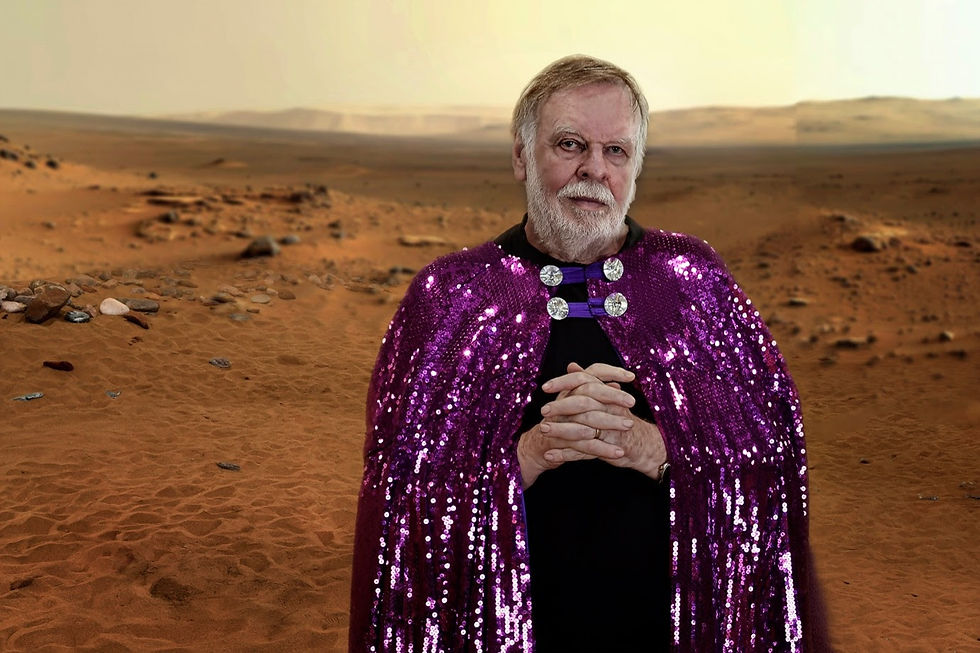
With Return to The Red Planet, Wakeman has once again demonstrated that inspiration and creativity need not diminish with age. If The Red Planet suggested a musician reinvigorated by a subject that clearly captured his imagination, then this follow-up confirms that impression. Rather than feeling like a lesser sequel, Return to The Red Planet operates as a companion piece, expanding upon ideas introduced by its predecessor whilst retaining a distinct identity of its own. Whilst the two albums can certainly be enjoyed independently, they are perhaps most rewarding when experienced back-to-back, allowing their themes, moods and interconnections to reveal themselves more fully.
As with the earlier album, the quality of the supporting musicians cannot be overstated, each contributing far more than simple accompaniment to Wakeman's vision. Most importantly, there is a genuine sense of enthusiasm running throughout the record; whether navigating sprawling instrumental landscapes, experimenting with unexpected stylistic turns or revelling in moments of melodic grandeur. Wakeman is fully invested in the journey and sounds like a musician still discovering new horizons rather than simply being content with revisiting old ones. Ambitious. Elegant. Enthralling.
Return to The Red Planet is released on 16th October 2026
For more information:


Comments