


Ranking The Songs: My Top 20 Genesis Songs (1968 - 1977)
Jul 24
9 min read

Written: July 2026
On my 14th birthday in July 1986, I received Invisible Touch – my first Genesis album. As I discussed in my article My Top 20 Genesis Songs (1978 – 1991), that era of the band will always hold a special place in my heart. However, as I began working backwards through their discography, an entirely different world opened up before me. From the pastoral beauty of Trespass through to the majestic sweep of Wind & Wuthering, I discovered a body of work overflowing with imagination, storytelling and musical ambition. Limiting myself to just twenty songs from this remarkable period proved almost impossible and many wonderful songs missed out. I had a total of more than thirty-five songs that were battling for places and I am sure, in time, I will question the absence of some of them. As always, this is a personal list rather than a definitive ranking and I have no doubt that your own choices will differ greatly from mine.

20: Stagnation (Trespass, 1970)
While Trespass may not enjoy the same recognition as the albums that followed, it remains one of the most important records in Genesis' development. It was also a huge step forward from the debut, From Genesis to Revelation. Stagnation is clear evidence of that: long before the grand narratives of Supper's Ready or One for the Vine, the band were already crafting music rich in atmosphere, imagination and emotional depth. Anthony Phillips' acoustic guitar work gives the song a wonderfully pastoral quality, while the gradual build towards its uplifting finale remains one of the most satisfying moments in the early part of the band’s career. Its influence can be heard throughout much of what Genesis would subsequently become.

19: The Lamia (The Lamb Lies Down on Broadway, 1974)
Although The Lamb Lies Down on Broadway is often remembered for its sprawling narrative and more dramatic moments, The Lamia reveals just how effective the album could be at creating atmosphere. Inspired by Greek mythology, the song finds Peter Gabriel weaving one of his most vivid lyrical tales against a backdrop of glorious musicianship. Tony Banks is magnificent throughout, his piano and keyboard arrangements bringing an ethereal quality that perfectly complements the story. There is a dreamlike elegance to the entire composition and the interplay between beauty and danger gives it a unique identity amongst the other tracks on the album.

18: Afterglow (Wind & Wuthering, 1976)
Wind & Wuthering is my favourite Genesis album and Afterglow remains one of its most moving moments. Following the complexity and ambition found elsewhere on the record, its relative simplicity is part of the song's appeal. Tony Banks provides one of his most affecting melodies, while Phil Collins delivers a vocal performance full of sincerity and yearning. Over the years, Afterglow became a concert favourite and it is easy to understand why. There is an honesty and directness to the song that transcends technical complexity, creating an emotional connection that has only grown stronger with time.

17: Ripples (A Trick of the Tail, 1976)
A Trick of the Tail proved that Genesis could not only survive Peter Gabriel's departure but continue to thrive creatively. Ripples reflects on the relentless passage of time and the fading of youth. It balances melancholy and beauty with remarkable elegance. Phil Collins delivers the lyrics with warmth and sensitivity, while the instrumental section is among the most rewarding on the album. Steve Hackett's contribution is especially noteworthy, his guitar carrying us through a passage that feels simultaneously wistful and uplifting.
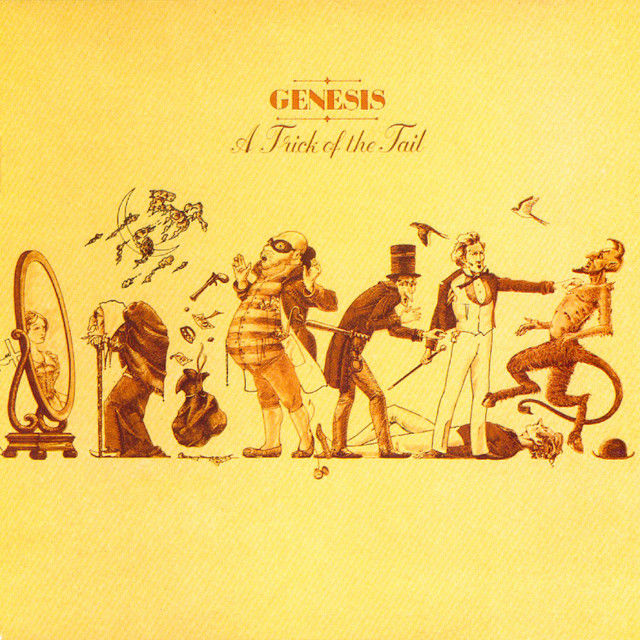
16: Mad Man Moon (A Trick of the Tail, 1976)
Amongst all the remarkable material on A Trick of the Tail, Mad Man Moon has always held a special appeal. Built around one of Tony Banks's most evocative compositions, the song balances longing, uncertainty and hope in a way few Genesis tracks manage quite so effectively. He dominates much of the track, his piano and keyboards providing both grandeur and intimacy, while Phil Collins delivers a superb vocal performance. The band exercise enormous restraint throughout, allowing the song to develop naturally before blossoming into a magnificent instrumental climax. It may not receive the recognition afforded to some other Genesis classics, but for me it remains one of their most rewarding pieces.

15: The Knife (Trespass, 1970)
If Stagnation represents the pastoral and reflective side of early Genesis, The Knife reveals the band's darker and more aggressive tendencies. For many listeners, this is the first truly great Genesis song and it is certainly the track that announced their growing ambition. Driven by forceful organ work, powerful drumming and Peter Gabriel's commanding vocal performance, it remains an exhilarating listen more than fifty years after its release. The song's biting examination of revolution and power gives it a lyrical weight to match its musical intensity. Even today, The Knife sounds remarkably bold and provides a fascinating glimpse of a band beginning to discover its full potential.

14: Time Table (Foxtrot, 1972)
I suspect many Genesis fans would be surprised to find Time Table this high but it has long been one of my personal favourites. Overshadowed by giants such as Watcher of the Skies and Supper's Ready, it is nevertheless a beautiful example of the band's ability to evoke nostalgia and longing. Peter Gabriel's lyrics reflect upon lost worlds and fading ideals, while the music possesses a warmth and elegance that continues to resonate with me. There is nothing overtly flashy about Time Table and that is part of its charm. Quietly reflective and deeply atmospheric, it captures a side of Genesis that I have always found fascinating.
13: The Lamb Lies Down on Broadway (The Lamb Lies Down on Broadway, 1974)
The title track of The Lamb Lies Down on Broadway has always felt like one of Genesis' greatest scene-setting achievements. In little over four minutes, the listener is transported into Rael's chaotic New York world as Peter Gabriel paints vivid images of street life, alienation and escape. Musically, it strikes an impressive balance between accessibility and progressive ambition, with Mike Rutherford's distinctive guitar motif instantly recognisable from its opening moments. Although I have never regarded The Lamb Lies Down on Broadway as my favourite Genesis album as a complete work, there is no denying the quality of some of the material it contains.
12: Eleventh Earl of Mar (Wind & Wuthering, 1976)
As the opening track to my favourite Genesis album, Eleventh Earl of Mar was always likely to find a place on this list. Following the success of A Trick of the Tail, the quartet sound energised and confident. Driven by one of Tony Banks' most commanding Mellotron themes and some outstanding drumming from Phil Collins, the song combines historical storytelling with tremendous musical momentum. The interplay between Banks, Rutherford and Collins is particularly effective and the result is an exciting opener that immediately demonstrates the strengths of this period of the band.

11: Dancing with the Moonlit Knight (Selling England by the Pound, 1973)
Opening with Gabriel's unaccompanied voice before steadily expanding into one of the album's most dynamic pieces, Dancing With The Moonlit Knight encapsulates much of what makes the record so special. The lyrics examine changing English identity and declining traditions, while the music shifts effortlessly between bucolic beauty, intricate musicianship and more forceful passages. Every member of the band contributes something memorable and the result is a composition that remains endlessly fascinating.
10: Watcher of the Skies (Foxtrot, 1972)
Few songs announce themselves quite like Watcher of the Skies. Tony Banks's iconic introduction immediately creates a sense of scale and mystery that remains one of the most recognisable openings in the genre. Inspired in part by Arthur C. Clarke's Childhood's End, Peter Gabriel's lyrics place humanity under the gaze of an alien observer, examining civilisation from an unfamiliar perspective. The track balances grandeur with aggression, particularly during its instrumental passages where the entire band sounds locked together with impressive precision. Foxtrot is home to some of Genesis' most celebrated compositions and Watcher of the Skies remains one of its defining statements.

9: The Musical Box (Nursery Cryme, 1971)
I know some readers will be surprised that Nursery Cryme only places one song in this countdown. The album contains a wealth of exceptional material and there are several other tracks I adore. However, The Musical Box feels untouchable. It was the song that truly announced the arrival of the classic Genesis sound, introducing Steve Hackett and Phil Collins while simultaneously showcasing the increasingly vivid imagination of Peter Gabriel and Tony Banks. The narrative is unsettling, the dynamics are expertly managed and the final section is among the most dramatic moments in the band's catalogue.
8: In the Cage (The Lamb Lies Down on Broadway, 1974)
Among all of the songs on The Lamb Lies Down on Broadway, In the Cage may be the one that captures the album's sense of desperation and psychological turmoil most effectively. From the opening seconds there is an urgency that rarely relents. Gabriel delivers one of his most intense vocal performances, while Banks's keyboard work drives the song forward with relentless energy. What has always impressed me is how the composition balances aggression and sophistication, never sacrificing one for the other. It also became a magnificent vehicle for instrumental adventure in the live arena.

7: The Carpet Crawlers (The Lamb Lies Down on Broadway, 1974)
If In the Cage represents the darker side of The Lamb, The Carpet Crawlers reveals its beauty. Built around one of the finest melodies Genesis ever wrote, the song possesses an almost hypnotic quality. Gabriel's vocal is wonderfully restrained and the imagery of the lyrics remains open to countless interpretations. There is a dreamlike atmosphere throughout, enhanced by the subtle performances of every member of the band. Unlike some Genesis epics, The Carpet Crawlers achieves its impact without relying on dramatic shifts or extended instrumental passages. Instead, it draws the listener into its enigmatic world before refusing to let go.

6: Entangled (A Trick of the Tail, 1976)
A Trick of the Tail would definitely feature in the top five of my ranking of all Genesis albums and Entangled has long been my favourite track. Inspired by themes of dreams, memory and perception, it creates a spellbinding atmosphere. Steve Hackett's twelve-string guitar work is exquisite, while Banks's keyboard textures add an almost otherworldly quality. Phil Collins delivers the lyrics with great sensitivity and restraint, allowing the music to breathe naturally. The closing instrumental section is genuinely magical, gradually surrounding the listener in layers of sound that are simultaneously comforting and mysterious.
5: Supper's Ready (Foxtrot, 1972)
No Genesis countdown covering this period could omit Supper's Ready from its upper reaches. Stretching beyond twenty-three minutes, it remains the band’s most ambitious composition and one of progressive rock's defining statements. What makes it so remarkable is not simply its length or complexity but the way its many movements feel like chapters within a greater story. From the gentle beauty of Lover's Leap through the bizarre theatrics of Willow Farm and onto the grandeur of Apocalypse in 9/8, every section contributes something essential. Phil Collins and Steve Hackett are both outstanding, yet this may ultimately be Peter Gabriel's finest lyrical achievement. The triumphant conclusion still sends a shiver down the spine.
4: Blood on the Rooftops (Wind & Wuthering, 1976)
If I had to explain why Wind & Wuthering remains my favourite Genesis album, Blood on the Rooftops would be one of the first songs I would play. Written largely by Steve Hackett and Phil Collins, it combines thoughtful lyrics with some of the most beautiful musicianship the band ever produced. Hackett's opening acoustic guitar passage is simply breathtaking and immediately establishes the reflective mood that permeates the entire composition. Collins delivers the lyrics with great sensitivity, while Tony Banks's arrangements provide subtle sophistication throughout. Without doubt, its observations are still relevant fifty years later.
3: Firth of Fifth (Selling England by the Pound, 1973)
There are few songs that better demonstrate the collective talents of Genesis than Firth of Fifth. Tony Banks's iconic piano introduction immediately announces that something special is about to unfold. It contains many wonderful moments but Steve Hackett's guitar solo remains one of the finest passages in the history of progressive rock. Every note feels perfectly judged, building naturally from the themes established earlier in the composition. While Selling England by the Pound contains several masterpieces, Firth of Fifth encapsulates much of what made Genesis unique: technical brilliance, emotional depth and extraordinary compositional ambition.
2: One for the Vine (Wind & Wuthering, 1976)
Tony Banks has written many exceptional songs throughout his career but One For The Vine may well be his crowning achievement. Combining a fascinating narrative with stunning musical development, the song constantly evolves while maintaining a remarkable sense of cohesion. The transitions between its different sections feel effortless and each member of the band contributes significantly to its success. Banks's keyboard work is magnificent throughout, while Collins delivers the story with conviction and clarity.
1: The Cinema Show (Selling England by the Pound, 1973)
Choosing a favourite Genesis song is an almost impossible task, yet The Cinema Show has remained my number one for many years. Gabriel's lyrics are evocative and richly textured, drawing inspiration from T. S. Eliot while capturing the uniquely English atmosphere that defines much of Selling England by the Pound. The first half is wonderful in its own right but it is the instrumental section that elevates the song to another level entirely. Tony Banks delivers what may be the greatest keyboard solo in progressive rock, while Phil Collins and Mike Rutherford establish a hypnotic rhythmic foundation beneath him. Steve Hackett's understated embellishments add further colour and depth. Every element works in perfect harmony and the result is, for me, the finest song Genesis ever recorded.
Listen to My Top 20 Genesis Songs (1969 - 1977) below


Comments